Growing up, the action/adventure genre for console games was all about the Zelda franchise, and like most Nintendo fans at the time, I played through every one that came out. But at the same time, the YS series by Nihon Falcom grew its own franchise and fanbase. Following my love of Astlibra Revision as a great 2D action RPG, I felt it was time to give the YS games a go and I wanted to talk about what I enjoy about each one in this classic franchise.
What is YS?
The YS games, with the exception of one spin-off, star Adol Christin — a red-haired swordsman who loves to do two things — go on adventures and defeat evil Gods and demons. While Final Fantasy started out as a turn-based JRPG and evolved into real-time combat, the YS games were always action-focused with light RPG elements.
The series has gone through several arcs in terms of design principles, and it can be hard to track the overall history of it because of that. Compounding this is the timeline in which the different games take place in is not sequential — YS 1‘s story takes place later in Adol’s life compared to YS 4. From a design point of view, while it is possible to play the original gameplay of YS 1 and 2, the original version of YS 3 is playable on the Nintendo EShop only and YS 4 and 5 to my knowledge don’t have a way of playing them on current gen platforms. Since Falcom has been porting the series to PC, the PC versions of three and four are the remakes that were originally made on the PSP.
Another point about this franchise is that it features amazing music from each game, with some of the best boss tracks I’ve heard in some time, with this one being my current favorite:
These games all showcase the appeal of an action-RPG, with it split more towards the action side. Leveling and gear are vital to winning — and the game does feature stat walls. If you are not the right level, or under geared, there will be fights that are literally impossible to win. However, lower difficulties notwithstanding, you need to be very quick with movement if you want to survive some of the harder boss fights that the series will throw at you. As an aside, if you’re someone who enjoyed Astlibra Revision or haven’t played it yet, a lot of the popularity of the action RPG design was inspired by YS.
The Bump Slash Era: YS 1 and 2
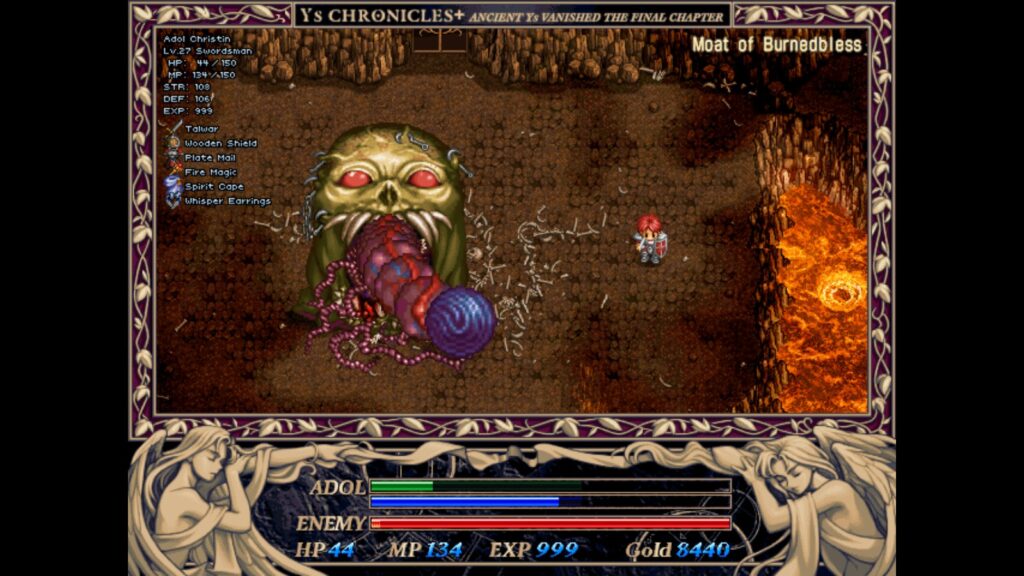
The bump slash games are their own particular style and can be hard to get used to today (source: Author)
The first two games are classic 80’s styled action-adventure — which means you are always one missed clue or item away from getting stumped. Both games are also famous for their use of “bump slash combat”, where the player attacks by bumping into the enemy while avoiding head-on collisions with them to avoid damage.
The bump slash is okay but certainly dated by today’s standards. Neither game is going to be overly long, unless you play on the highest difficulty, and they both stand as part of the history of the franchise and for games of that era. I would definitely suggest playing with a guide on hand, as there is some classic game jank to deal with in terms of a few of the puzzles.
The sequel would introduce magic, which would become required to fight all the bosses with, and would be the last time that these games would tell a story in chronological order.
The PSP Era: YS 3,4,6 and Origin
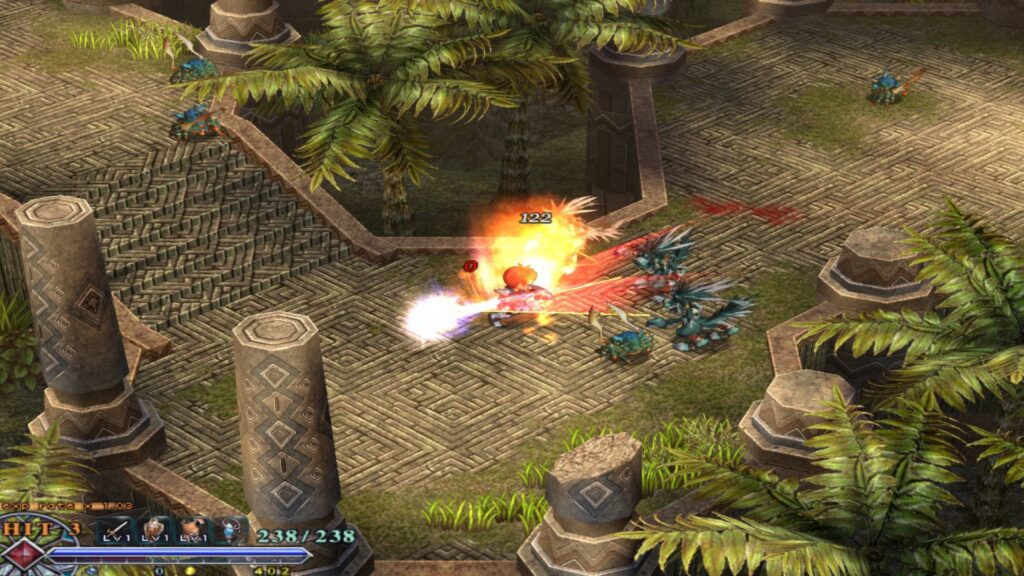
The later YS games would begin to set the foundation of what would become the entire series (source: Steam)
Now this is where things get a bit confusing. As mentioned, the YS 3 and 4 available today are not the same as the ones originally released, but the PSP remakes. Both games, subtitled The Oath in Felghana and Memories of Celceta, respectively, are modernized by PSP standards and feature mixes of story beats and new cutscenes compared to their original versions.
Felghana formally introduces Adol’s best friend and companion, Dogi, as part of his traveling crew, who will become playable in later entries. Of the classic games, it also has one of the hardest final bosses I’ve seen in a game, and good luck to the people attempting the no-hit achievement on it.
Memories of Celceta is an unusual remake. It features elements that would become borrowed from later games in the series, with Adol always a part of a team that is controlled by AI partners. Fans aren’t happy that the ending is one of the most abrupt in the series, and this does get at another nitpick from the fans. While these games were ported from the PSP to other platforms, some of the original features, such as voice acting and additional challenges, did not make the transition over. Both Felghana and Celceta were based on the designs and look featured in six, which would then be used as the template for YS Origins in 2006.
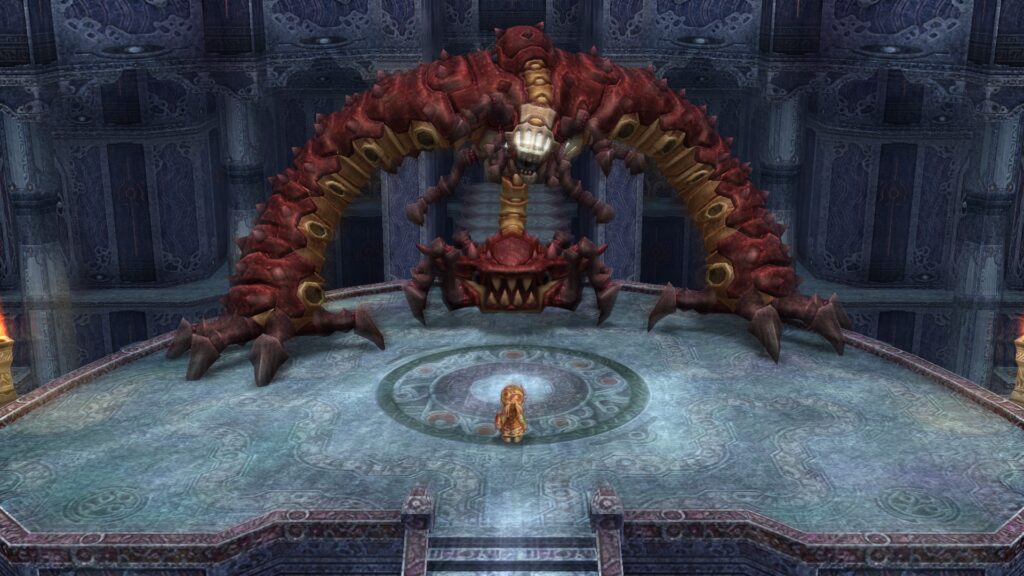
Ys Origin is a great introduction to this era of the series, and has the most replayability out of all them (source: Author)
YS 6 was the first one to be released on the PSP and represented a major jump in terms of aesthetics and design compared to the previous games.
The developers focused a lot on different movement tech, including the infamous lunge jump tech. This required the player to walk forward, pause, and then attack to do a lunge at the same time they jump to get increased height and distance. The game also had the worst grind of the YS games of this era, requiring the player to farm materials to upgrade three different swords to have the strength to finish it. Six’s story involves Adol getting stranded on an island and meeting a mysterious race of people who guard an ancient treasure. The game introduces the closest Adol has to a rival with Geis who will appear more in 7.
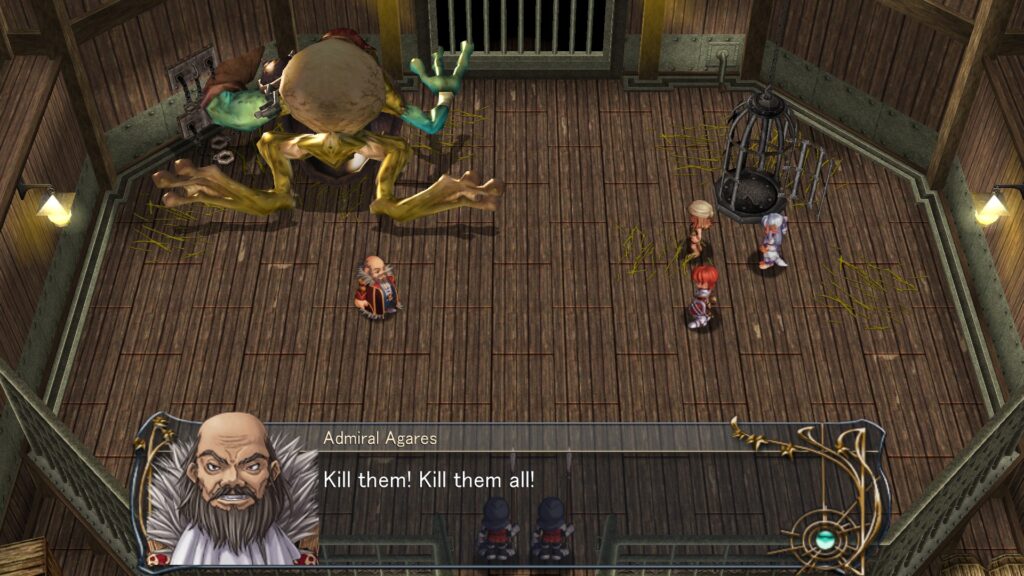
YS 6 is the final game to be fully 2D, and the last one to feature annoying movement tech (source: author)
YS Origin was an exclusive side-story released for the PSP and detailed the events that happened 700 years before Adol begins his journey.
Featuring three different characters who face different versions of all the bosses, there was more replayability to it compared to any other entry in the series. Each individual play is shorter than a full one of any of the main games. I would honestly say that it’s the best one to play if you are completely new to the series and looking for a classic style entry.
Ys’s Modern Era: YS 7 – Today
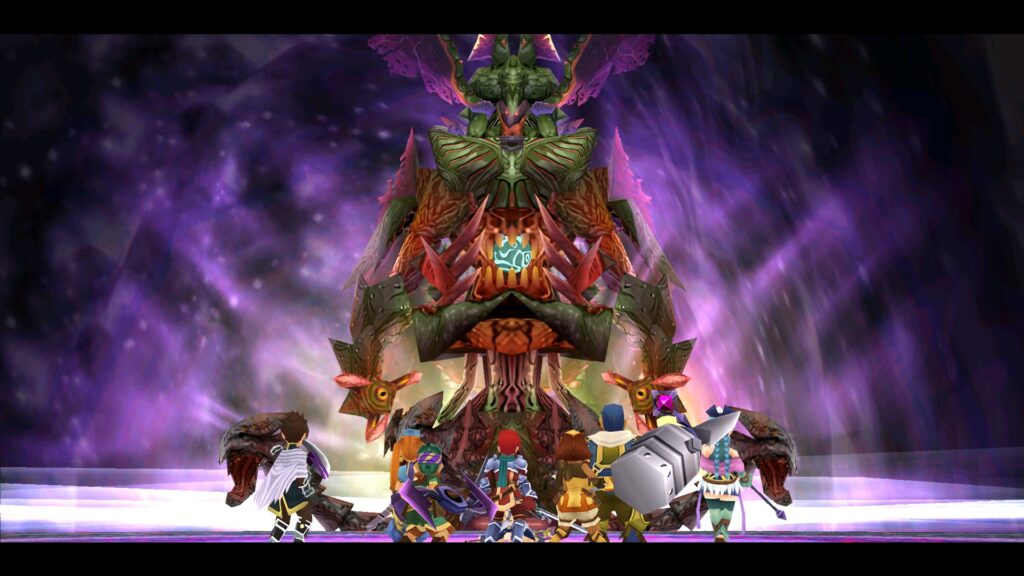
If Adol doesn’t fight a godly creature, it’s not a YS game (Source: Author)
Starting with YS 7, this is when the series officially enters the “modern era.” The first one to be built as a fully 3D game and would introduce the new dynamic of Adol always traveling in a party. The idea of enemies having different strengths and weaknesses is standardized to three weapon types — bash, slash, and pierce: with different characters using each weapon type.
The AI was…interesting. They would target enemies on their own based on proximity and would use special skills in conjunction with the player. A major part of team management was that only the player’s-controlled character would take full damage from enemies. For skilled players, it was possible to switch character control at the right time to avoid a major attack and have the AI-controlled character take reduced damage.
Another feature that would become standardized is providing the player with useful defensive options. The “flash guard” is, for all intents and purposes, a parry that allows the player to nullify the damage and give them a few seconds of guaranteed critical damage. You can also get a flash step by dodging at the moment of impact, slowing the enemy down and allowing the player to hit for full damage.
Our story is a continuation of 6, with Adol arriving on a new continent thanks to a long-fought war coming to an end. There, he learns of a mysterious sickness, and will have to team up with the locals to save mankind.
Of the final bosses in the series, this one is one of the most memorable, requiring the player to split the seven-person party into three groups to take on each segment, with Adol facing off against the head for the final phase.
Going to YS 8, the series moved from the PSP to the PlayStation 4 and current-gen platforms for the time. Despite the leap forward in terms of technology, the story takes place in-between Celceta and YS 6 as Adol and Dogi get stranded on a mysterious, deserted island. This is the first time in the series that there is no money/currency to collect, as there are technically no shops on the island.
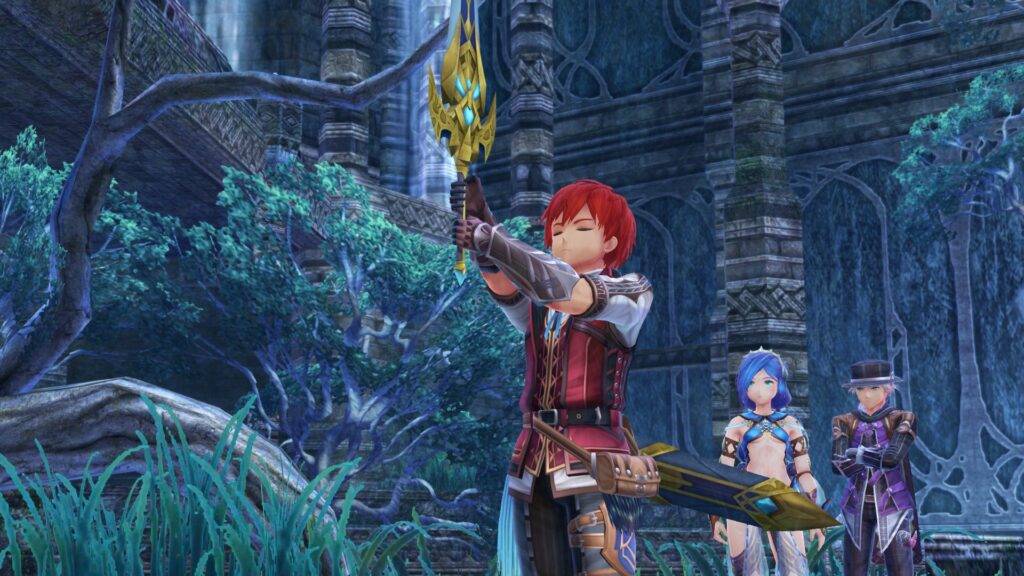
The number of world destroying weapons Adol gets and loses is also a point of YS (source: Author)
Instead, everything is built on collecting drops from enemies and resource nodes that are used to craft all the items, consumables, and weapon upgrades.
Like Falcom’s other major series, Trails in the Sky, a quest system is introduced that the player can do for bonus items, provided they don’t take too long. Going from all the previous YS games to eight, you can really see the evolution and scope of the series grow. This is by far the largest of the YS games released at that point, with the most content to go for. The game also introduced additional modes of defending your base from waves of monsters. The story is another favorite for fans, introducing Dana as a playable character and major player in the story that I won’t spoil here.
I’m hard-pressed to recommend players either start with one of the older games or just go straight to YS 8 as it’s that big of a jump in terms of gameplay, presentation, and design.
YS 9 is a mechanical follow up to 8, with a lot of the mechanics and systems rebalanced and iterated on. It is also the most forward chronologically speaking YS at this time. Adol’s adventures have finally caught up with him, and he has been imprisoned under suspicious activities… for the fact that he has been around every major world-shattering event that has happened. In order to save himself and the city, he is cursed to become a monstrum, which essentially amounts to looking cooler and getting new movement tech.
The entire game takes place within the city and surrounding area, which does make it a bit drabber compared to the different biomes from 8. The movement tech is by far the most advanced seen in the series to date. Each ally Adol meets grants him a different power that lets him explore more easily. Within 30 minutes, you’ll already have access to double jumping, and soon thereafter, wall running. The city is full of a lot of collectibles and bonus challenges, and of course rewards for finding everything.
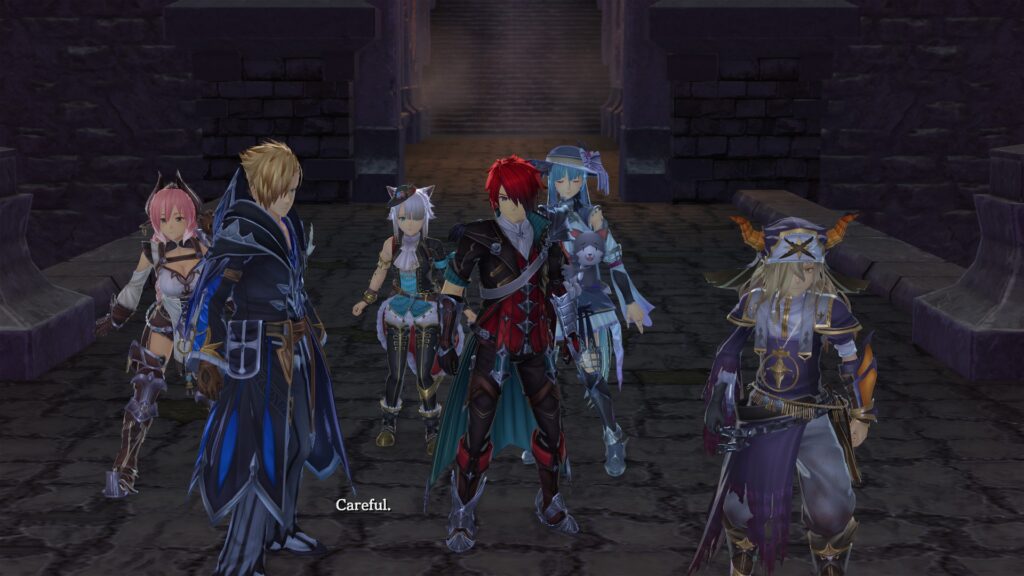
YS, despite being an action-focused series, has done a great job of expanding the world and the side characters Adol meets (source: Author)
The raids return, along with the ability to upgrade your defensive structures. From an enemy standpoint, the health bars don’t feel as large in this compared to 8. I played 9 on the second highest difficulty, which doubles the enemy attack speeds, but they still went down in relatively short order. Overall, YS 9 is mechanically a stronger game than 8, but I found the overall package of 8 and its story to be better.
And lastly, we come to YS 10, which just got a re-release on Steam in February. YS 10‘s mission seems to be a complete rebuild of the combat and systems of the previous games. No more flash guarding or flash stepping, and you are now in a party of 2 instead of 3. Taking place between 3 and 4, Adol is up north and meets Karja who is a Viking/norman princess with the power of mana.
The newly introduced duo system is the main focal point of the game — with Adol and Karja literally tethered together. This is the first time in the series that you essentially have infinite revives, as if one character goes down, the other can get them up at the cost of half their HP. Enemy armor is now a factor, and Karja’s ax attack can cut through it faster than Adol’s sword. I found this one to be the most frustrating of the modern games and one of the harder introduction chapters as well. Too often, enemies would dodge out of the way of my counterattack, and there are no rewards for perfect dodges.
The bulk of the heavy lifting of the combat comes in the form of the revenge gauge. By parrying enemy attacks, you build up the meter that adds a multiplier to your next skill-based attack, and this is your hardest hitting ability. This is also the best means of dealing break damage needed to get through armor, which many bosses can regenerate after a fixed period of time.
In terms of sub-systems and progression, YS 10 is the most advanced in the entire series. Instead of traveling on foot, you are sailing the seas in your own boat, complete with progression, upgrades, and ship-based combat. New movement gets introduced with grapple points and rail grinding. For the first time in YS, you have a passive tree in the form of attaching mana seeds to Karja and Adol. Each color represents a set of perks, and the more of a set color you have connected, the higher tier perks you’ll get.
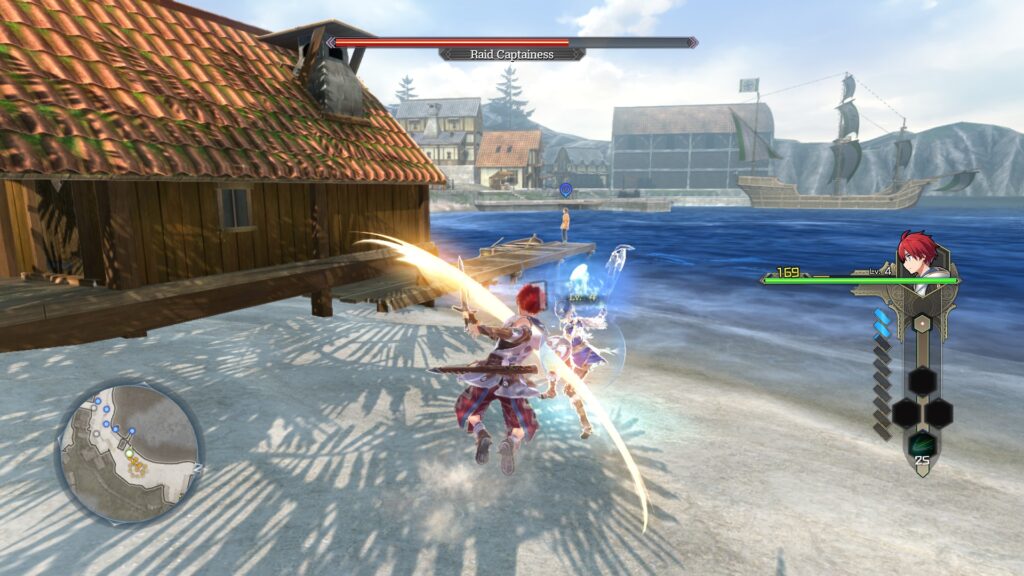
Ys 10 is by no means a bad game, but I would rather play it as it’s own thing and not so soon after going through 7-9. (source: Author)
However, with these improvements coming at the cost of removing the ability to flash step and flash guard does hurt the game for me.
You can parry attacks which can set enemies up for a cutscene super attack, but that can only happen once per fight. I think this was done because flash guarding was extremely powerful. Since it gives you guaranteed crits, it also made every crit-chance giving piece of gear worthless.
These changes seem to be a way of providing a more balanced take on the combat system, but it ended up making YS 10 my least favorite of the modern entries. The reason is that it feels like I’m playing half a new game with the additions but still relying on the same combat and stylings of the previous two. The inclusion of enemy armor simply doubles the health bar of the enemies and bosses that you have to fight and seems to be a way to just prolong fights. Both Adol and Karja get different upgrades that are used for puzzle solving and combat, but it also goes to slow things down more with having to swap between the two and remember who can do what where.
I really liked the other changes, but when the combat system of an action RPG is my least favorite part, nothing else is going to make that better.
YS’s Legacy
The YS series may not have the name recognition of Final Fantasy, but this charming franchise still has a hardcore fanbase who look forward to each new iteration. Between it and the Trails series, Falcom fans have all the turn-based and real-time RPG action that one could ask for. And if you don’t mind some old school jank in spots, then you have a lot of adventuring and time to spend with Adol.
For game design ramblings and indie games, be sure to follow me on Bluesky