Video games have always been a kind of tech stress test.
Every new leap in computing eventually shows up in games first. We went from chunky sprites to fully 3D worlds. From LAN parties to global MMOs. From physics that barely worked to engines that let you knock over 1,000 crates just because you can.
And now? It’s AI’s turn in the spotlight.
According to AI experts at DesignRush, AI is getting baked into basically every industry right now. But games are one of the more interesting places to watch it happen, because games are already systems on top of systems. They’re basically controlled chaos by design.
So, when AI shows up here, it doesn’t just optimize things. It starts messing with how worlds are built, how characters behave, and how players interact with everything.
We’re not at “fully AI-generated Skyrim 2” yet. But you can already see the edges of where this is going.
And honestly? It’s kind of wild.
NPCs are slowly escaping their script loops
Every gamer has that one NPC line permanently stuck in their brain.
Like in Skyrim, where guards will tell you they “took an arrow in the knee” for what feels like the 400th time, even after you’ve basically become the god-emperor of the region. Or in Oblivion, where conversations feel like two sleep-deprived robots trying to remember how human speech works.
It’s funny the first few times. Then it becomes background noise. Then it becomes a meme. Then it becomes slightly annoying. Then it loops back around to funny again.
But the core issue is simple: NPCs don’t know anything. They just repeat what they were told to say.
That’s where AI starts getting interesting.
Instead of every NPC running the same dialogue tree forever, developers are experimenting with systems where characters can react more dynamically. Not full-on “talk to anyone about anything” yet, but more like: remembering what you did, changing tone based on events, reacting instead of just reciting.
The goal isn’t to simulate real people perfectly. It’s just to stop breaking immersion every time you walk past the same guy who’s apparently been stuck in a single conversation since launch day.
Procedural generation is easy. Making it not boring is the hard part
We’ve had procedural generation for a while now. It’s not new.
No Man’s Sky is the obvious example everyone goes to. And yeah, it launched with a universe so big it basically made scale meaningless. Quintillions of planets sounds impressive until you realize a lot of them feel like different-colored versions of the same idea after a while.
That’s the catch with procedural content: more doesn’t automatically mean better.
A randomly generated cave is still just a cave if nothing interesting happens inside it.
Where AI starts to matter is in pushing generation beyond just layout and terrain. Instead of “here’s a forest with random trees,” it starts becoming “here’s a forest that supports this type of encounter, this kind of pacing, this kind of story beat.”
Less random noise. More intentional structure.
At least in theory. We’re still very much in the “experimenting and breaking things” phase.
Games are quietly getting better at reading how you play
One of the funniest things about games is how often players ignore what developers clearly expected them to do.
A studio spends years building a dramatic main questline. And a huge chunk of players go: “Cool, but I’m going to spend 80 hours crafting potions, stealing forks, and climbing every mountain first.”
Skyrim is basically the poster child for this behavior.
And that mismatch between design intent and player behavior is where AI starts to get useful.
Instead of treating every player the same way, games can start picking up on patterns. If you’re the type who explores everything, the game can lean into that. If you rush combat, it can adjust pacing. If you spend half your time messing with systems instead of following quests… well, the game might start supporting that style more directly.
We’re not talking about mind-reading AI here. Just systems that notice what you’re already doing and respond a bit more intelligently than a static design ever could.
Emergent storytelling is about to get even messier (in a good way)
Some of the best gaming stories were never actually written.
Ask anyone who’s played RimWorld or Dwarf Fortress and you’ll get stories that sound like fever dreams.
A colony wiped out because someone punched a monkey. A fortress collapsing because of one badly placed hallway. A king starting a war because of a completely unhinged family tree in Crusader Kings III.
None of that is scripted. It just… happens because systems interact.
That’s the magic.
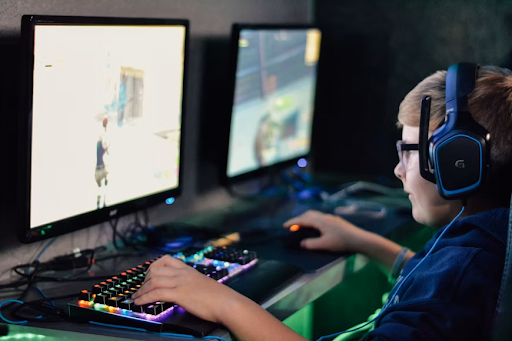
And AI has the potential to make those systems even more reactive and unpredictable. Characters that develop slightly different behaviors over time. Worlds that shift based on what players do collectively. Situations that feel less like “designed content” and more like something that emerged naturally.
Basically: more chaos, but structured chaos.
Cloud tech is the quiet multiplier in the background
Cloud gaming usually gets talked about like it’s just “play games without a console.”
But the more interesting part is what it does behind the scenes.
If you don’t have to rely entirely on local hardware, you can start building bigger simulations, more complex systems, and more persistent worlds. Stuff that doesn’t need to squeeze into whatever your GPU can handle at home.
It’s not flashy, but it expands the ceiling.
And combined with AI systems, it starts opening up some pretty weird possibilities for large-scale game worlds that feel more alive than what we’re used to today.
The weird part is… we’re still early
Gaming has a history of doing unexpected things with new tech.
Nobody predicted Minecraft would turn into an engineering sandbox where people build CPUs inside a game. Nobody expected EVE Online to produce real political drama that spills into news headlines.
Players always push systems further than intended.
So whatever AI ends up doing in games, it probably won’t be limited to what studios are thinking about right now.
The real changes usually show up later, once players get their hands on the tools and start breaking them in ways nobody planned for.