Modern life often rewards certainty, speed, and constant output. Yet psychologically, those same demands can narrow thinking patterns and strain emotional balance over time. Many people searching for healthier ways to adapt to stress eventually notice that resilience does not always come from pushing harder, but from learning how to shift, pause, and re-engage. For me, that realization began when I started paying closer attention to how intentional play affected my mental state, starting with how Playiro gaming platform presents clear, engaging game rules that make it easy to step into play that challenges attention, supports adaptability, and encourages social interaction without feeling like escapism.
Play is frequently underestimated in adult life, dismissed as leisure rather than learning. Psychologically, however, play occupies a unique space where the brain practices flexibility and emotional regulation without the weight of real-world consequences. When approached consciously, games become tools for strengthening how we think, respond, and recover.
Understanding Cognitive Flexibility
Cognitive flexibility refers to the brain’s ability to shift perspectives, adapt to changing rules, and adjust strategies when circumstances evolve. It plays a critical role in problem-solving, creativity, emotional regulation, and decision-making. People with higher cognitive flexibility tend to handle uncertainty more effectively and experience less emotional overwhelm when plans change.
Games naturally exercise this skill. Rules evolve, outcomes are uncertain, and players are frequently asked to revise their approach mid-stream. Unlike real-life challenges, games offer immediate feedback without lasting risk. This combination allows the brain to practice adaptation in a low-pressure environment, reinforcing neural pathways associated with flexible thinking.
Play as a Training Ground for Adaptation
One of the defining features of games is unpredictability. A single move can change the entire landscape, forcing players to reassess goals and strategies. Each adjustment strengthens mental agility. Over time, this repeated exposure trains the brain to remain open rather than rigid when faced with unexpected outcomes.
This kind of adaptive thinking carries into daily life. People who engage regularly in structured play often find it easier to reframe setbacks, consider alternative solutions, and respond thoughtfully rather than reactively. The brain becomes accustomed to change as part of the process, not a threat to stability.
Emotional Resilience Through Low-Stakes Challenge
Emotional resilience is not about avoiding stress, but about recovering from it. Games offer a controlled setting where frustration, disappointment, excitement, and anticipation arise naturally. Because the stakes are low, these emotions can be experienced fully without becoming overwhelming.
Losses, mistakes, and delays are built into play. Learning to tolerate these moments without disengaging builds emotional endurance. Players practice calming themselves, reassessing the situation, and continuing forward. Over time, this strengthens emotional regulation skills that are essential for managing real-world stressors.
The Connection Between Play and Stress Regulation
Play also engages the nervous system in a restorative way. Focused play often induces a state of flow, where attention is absorbed and intrusive thoughts quiet down. This state allows the brain to shift away from chronic stress responses and into more balanced emotional patterns.
Psychological research summarized by the American Psychological Association shows that playful engagement supports stress reduction and emotional balance by activating reward pathways while lowering cortisol levels. This helps explain why people often feel mentally refreshed after play, even when the activity involves challenge or competition.
Social Play and Emotional Intelligence
Many games involve social interaction, cooperation, or friendly competition. These elements introduce emotional complexity that mirrors real relationships. Players must read cues, manage reactions, and respond to others’ behavior in real time.
This dynamic strengthens emotional intelligence. Individuals become more aware of how their emotions influence others and how group energy shifts in response to behavior. Practicing these skills in play environments allows for reflection and adjustment without damaging real-world relationships.
Why Structure Matters
Not all play offers the same psychological benefits. Structured play provides a balance between freedom and containment. Clear rules reduce uncertainty, allowing the mind to focus on engagement rather than confusion. At the same time, flexibility within those rules encourages creativity and experimentation.
This balance is particularly effective for developing resilience. Structure creates safety, while variability fosters growth. Together, they support emotional stability while still encouraging mental expansion.
Play as a Counterweight to Rigidity
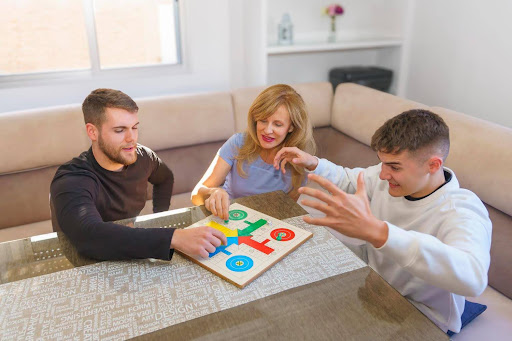
Many adults fall into rigid thinking patterns without realizing it. Repetition, routine, and pressure to perform can narrow perspective over time. Play interrupts this rigidity. It invites curiosity and experimentation, reminding the brain that not every outcome needs to be optimized or controlled.
This shift has psychological consequences. People who engage in playful activities often report greater emotional openness, reduced fear of failure, and increased willingness to explore unfamiliar ideas. These qualities are closely linked to resilience and long-term mental health.
Integrating Play Into Everyday Life
The benefits of play do not require large time investments. Short, consistent engagement matters more than occasional extended sessions. Even brief periods of focused play can reinforce cognitive flexibility and emotional balance when practiced regularly.
The key is intentionality. Viewing play as a form of mental exercise rather than a break from growth reframes its role in daily life. Over time, play becomes part of emotional maintenance rather than an optional indulgence.
Rethinking Growth and Strength
Cultural narratives often frame growth as serious, effortful, and linear. Play challenges that idea. It suggests that adaptability, resilience, and emotional intelligence can be developed through curiosity and engagement rather than constant pressure.
By creating space for low-risk experimentation, play strengthens the mind’s ability to navigate complexity. Cognitive flexibility improves as the brain practices change, while emotional resilience grows through repeated exposure to manageable challenges.
In this way, play is not a distraction from psychological growth. It is one of its most accessible and sustainable pathways. When approached with awareness, games become more than entertainment; they become quiet but powerful tools for mental well-being and emotional strength.