Strategy teams lose the board when each competitor visual lives in a different login. The canvas still shows a neat box labeled “evidence,” but the logo crop sits in one tool, the variant sit in another, and the note about why a take died lives in a chat that nobody opens during the meeting. An AI API that keeps image work in one account only helps if the card, the source crop, and the reject line can travel together.
The failure is not missing software. The failure is a slide that cites a mark the room cannot defend. Someone cropped a competitor bottle last week. Someone else regenerated a cleaner label overnight. In the deck, both images look like the same SKU. On the conference display, the second mark has a different shoulder curve and a caption that no longer matches the source URL written on the card. The partner in the room notices before finance does.
Canvas Evidence Dies In Scattered Logins
A competitor card is a small object with a hard job. It must show one mark, one claim, and one source the room can reopen. When those three pieces live in three places, the card becomes decoration. The canvas still looks complete. The proof does not.
Watch the usual scatter. The approved crop sits in a shared drive. The “improved” label sits in a trial account that expires. The reason the first take was thrown out sits in a thread titled “quick visual.” By the time the slide is built, the analyst pastes whichever file opens fastest. The room then argues taste. Nobody can reopen the source.
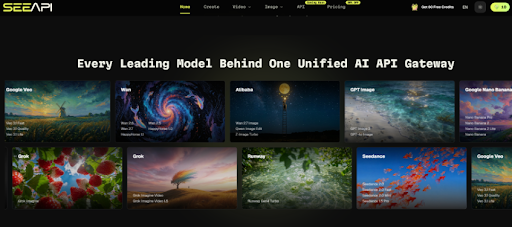
SeeAPI is useful here only as a place where the crop, the next variant, and the spend sit in one history. The homepage pitch is one account and one balance for image and video work, used online before anyone talks about production. For strategy ops, that sentence is an evidence rule, not a model parade.
One Gateway Keeps The Card And The Source Together
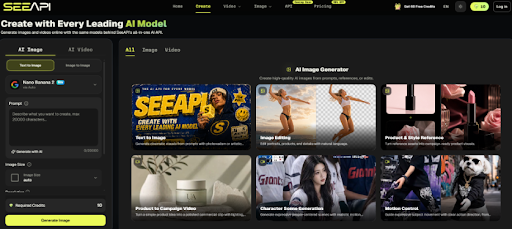
The working habit is boring. Lock the logo crop first. Write the source line on the card before anyone generates. Then open the image workspace, attach that crop as the reference, and ask for one allowed change. Compare the new file at slide size, not in a square preview. If the mark no longer matches the crop, the card does not get the new file.
This is slower than hunting a prettier bottle. It is faster than a board week that dies on a mark nobody can source. The gateway does not invent competitive insight. It keeps the visual proof from drifting off the card.
| Checkpoint | Scattered logins | One-gateway card desk |
| Logo crop | Drive folder plus a trial export | Locked crop attached as reference |
| Source line | Missing or stuck in chat | Written on the card before generate |
| Provider stall | New login “just this once” | Default and backup named in the brief |
| Slide review | Messenger thumbnail | Wide-slide crop beside the source |
Read the table as a packing rule. If any row on the right is empty, the card is not ready for the room.
Lock The Logo Crop Before Any Variant
The crop is the object. Not the mood of the aisle. Not a prompt that says “make it more premium.” If the card is about a shoulder logo on a 330 ml can, that shoulder is what you attach. When I opened the locked crop beside the first variant, the ribbon had slid down the can and the letters had thickened. The thumbnail still looked like the SKU. The slide crop did not. That take never entered the deck.
Write The Source Line On The Card
A card without a source line is a rumor with better lighting. Write the page, the date, and who locked the crop. If a later variant is kept, add one more line: which model route produced it, and why the original crop was not enough. The next analyst should not have to reverse-engineer the week from filenames.
Provider Order Matters During A Board Week
Board weeks fail in ordinary ways. A provider slows down. A generate returns nothing useful. Someone opens a second login “just this once.” The card then inherits a file that has no home in the history the team will audit later.
The public routing story on SeeAPI is specific: several providers can sit behind the same model, you set a default, you drag a custom priority, and the workspace can switch when a path fails. The result is supposed to come back in one shape. For a strategy desk, the useful reading is that the card does not change houses when the first path stalls. Collecting more vendor logos does not fix that.
Set that order before the meeting, not during it. If nobody named the default and the backup, the room will treat every stall as a reason to invent a new tool. That is how evidence leaves the canvas.
Set Default And Backup Before The Meeting
One line in the brief is enough: this model, this default provider, this backup, this reason to switch. Latency, an empty result, or a timeout are reasons. “I liked the other homepage better” is not. The automatic switch can move the job. The team still has to know what moved, or the card’s source line becomes fiction.
In our desk pipeline, that line sits next to the crop, not in a separate ops wiki that nobody opens. If the backup fires, the card gets a note the same hour. Otherwise the Monday reconstruction starts from screenshots.
Compare Cards At The Slide Crop
Most bad variants look fine in a messenger bubble. They die on a wide slide. Open the locked crop and the new file at the size the room will actually see. Check three places: the mark’s geometry, any legal line under the mark, and whether the product still matches the SKU named on the card.
If the geometry drifted, the file is discarded. If a legal line became unreadable, the file is discarded. If the prompt invented a second badge the source page never showed, the file is discarded. That take never entered the deck and never published as evidence. Do not debate cinematic language. Treat the card as a citation you can reopen, not as campaign art.
A generate that returns no usable file should not burn the balance under the published fail handling. That is bookkeeping. It does not decide whether the card is honest. An empty result that still costs an hour of waiting is still an hour if you never attached the right crop.
What A Unified Balance Changes For Strategy Ops
Credits that never expire and stack in one balance matter when a board date slips. They do not matter if the team cannot see stills and retries in one place. Scattered trial wallets hide how many almost-right bottles were made before the slide was built. A single ledger makes that visible when someone asks why the week produced twelve files and one usable card.
SeeAPI also keeps creation history with the same account. Use that history as the audit trail for the card, not as a gallery of unused looks. If a file is not on the card, it does not need a speech in the meeting.
Never-Expire Credits Versus A Missing Kill Note
A balance that does not expire will still fund the same mistake next quarter if the kill note is missing. Write the reject beside the spend. “Ribbon slid, letters thickened, SKU no longer matches source” is a note. “Didn’t love it” is not. The first note teaches the next variant. The second note teaches nothing and still costs review time.
Licensing Notes The Gateway Cannot Read
No gateway reads your reuse notes. If the source page forbids copying the mark, the cleanest crop is still the wrong file. If the claim on the canvas is about price or ingredients, the visual cannot invent a number the source did not print. The workspace can keep variants together. It cannot swear the card is legal.
Treat every kept variant as a citation that must reopen. If you cannot reopen the source in the meeting, the card is not ready, no matter how stable the mark looks. A wasted hour of board debate about an unsourced bottle is still a wasted hour.
Use Or Skip For Strategy Packs
Use this path if your week builds competitor cards that must survive a wide slide and a hostile question about the source. Skip it if you only need a mood picture and you will never cite the mark. SeeAPI fits a strategy desk that wants one history for crop, variant, and provider path. It does not fit a team that wants a button labeled “make the canvas look finished.”
Lock the crop. Write the source line. Set the provider order before the meeting. Compare at slide size. Keep the file only when the mark still matches the card. That is the whole case: fewer pretty orphans, fewer board-week arguments about a bottle nobody can source, and a canvas whose evidence box still means evidence.