Gaming has always had a relationship with altered states. From the energy drink culture that fueled the early esports scene to the nootropic supplements now marketed specifically at competitive players, the gaming community has never been shy about exploring tools that promise a cognitive edge, a more immersive experience, or simply a more enjoyable session.
Cannabis is the oldest and most culturally embedded of those tools. And in 2026, a specific format of cannabis consumption has emerged as the one most relevant to serious gamers — THCa flower.
Not because it is the most potent. Not because it is the newest. But because it sits in a precise cognitive sweet spot that other cannabis formats do not — delivering a controlled, clear-headed experience that can complement the focused, strategic, and creative mental states that great gaming demands, without the unpredictable intensity that has historically made traditional THC products a risky proposition for anyone trying to actually perform at something.
This guide is the honest, analytical breakdown that every gamer should read before they light up. No hype. No overselling. Just what THCa flower actually is, how it affects the brain in ways relevant to gaming, how to match it to your game type, how to dose it correctly, and where the genuine risks are — because they exist, and ignoring them helps nobody.
WHAT IS THCA FLOWER AND WHY IS IT DIFFERENT
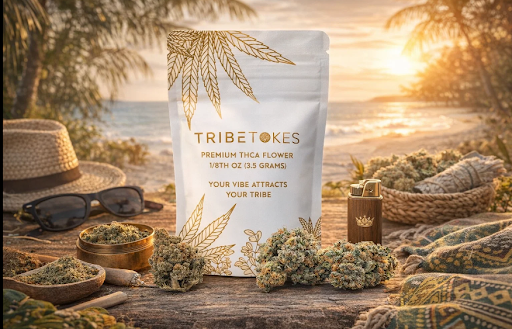
Before anything else, you need to understand what THCa flower actually is — because most people confuse it with regular cannabis, and that confusion leads to poor decisions about whether and how to use it.
The Chemistry in Plain Language
THCa stands for tetrahydrocannabinolic acid. It is the raw, unactivated form of THC that exists in the cannabis plant before heat is applied. In its natural, unheated state, THCa is non-psychoactive. Your body cannot process it the same way it processes THC, and consuming raw THCa flower without heating it produces no intoxicating effect.
The key word there is “without heating.” When you smoke or vape THCa flower or use a THCA vape device designed for controlled vaporization, the heat of combustion or vaporization triggers a chemical process called decarboxylation — the removal of a carboxyl group from the THCa molecule. This converts THCa into Delta-9 THC, the active psychoactive compound that produces the cannabis high. So when you smoke THCa flower, you are getting THC. The difference is in how you get there.
Why the Pathway Matters for Gamers
The conversion process through decarboxylation when smoking or vaping THCa flower is more gradual and controllable than the delivery of THC through traditional cannabis products, concentrated extracts, or high-potency edibles. This graduated onset gives experienced consumers a more measured, incremental experience — easier to calibrate to a specific functional state rather than an overwhelming high.
For gamers, that calibration capability matters enormously. The difference between a productive, focused gaming session and one where you are staring at your inventory screen for fifteen minutes is often a difference of dose and onset speed. THCa flower’s more controlled delivery profile makes it easier to find and maintain that productive middle ground.
The Legal Architecture
THCa flower also occupies an interesting regulatory position in the United States. Under the 2018 Farm Bill framework, hemp-derived products with less than 0.3% Delta-9 THC on a dry weight basis are federally legal. THCa, in its unheated form, is not Delta-9 THC — which means hemp-derived THCa flower with compliant Delta-9 levels sits within legal federal hemp definitions in many jurisdictions, despite converting to THC upon consumption.
This is why THCa flower from premium hemp brands like TribeTokes is widely available online and ships to states where traditional cannabis products remain restricted. For gamers in states that have not legalized recreational cannabis, this is a significant and practically relevant distinction. It is also why reading the COA on any THCa flower product matters — the batch-specific lab document confirms both the THCa content and the Delta-9 THC level that determines legal compliance.
THE COGNITIVE SCIENCE — WHAT THCA FLOWER ACTUALLY DOES TO YOUR BRAIN WHILE GAMING
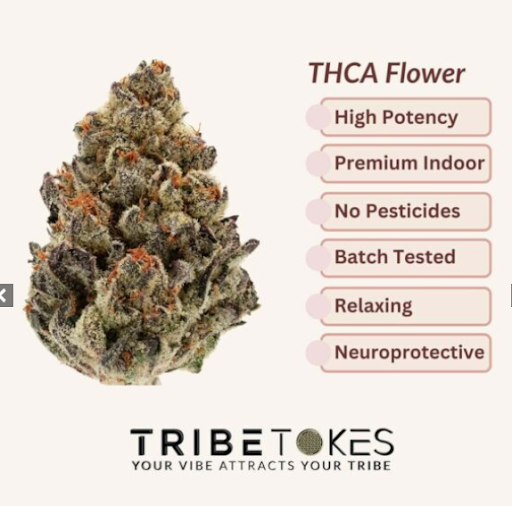
This is where most cannabis and gaming content falls short — hand-waving at “focus” and “creativity” without explaining the actual mechanisms at work. Game-Wisdom readers deserve better than that. Here is what the science actually supports.
The Endocannabinoid System and Gaming Performance
Your brain has a built-in cannabinoid system — the endocannabinoid system — that regulates neurotransmitter signaling across multiple functions including mood, memory, attention, and motor control. THC, once produced from THCa through decarboxylation, binds to CB1 receptors primarily in the prefrontal cortex, hippocampus, and cerebellum — regions governing executive function, memory formation, and motor coordination respectively.
This is why cannabis has complex, dose-dependent effects on gaming performance. At low doses, CB1 activation in the prefrontal cortex can reduce anxiety-driven overthinking and allow more automatic, intuitive decision-making — the kind of fluid, pattern-recognition-based play that experienced gamers describe as being “in the zone.” At higher doses, the same receptor activation begins to impair executive function, slow working memory retrieval, and disrupt the fine motor control that competitive gaming demands.
The dose-response curve is the central fact of cannabis and gaming performance. THCa flower’s more gradual onset gives players a better chance of staying on the productive side of that curve.
Flow State and the Cannabis Connection
Flow state — the psychological condition of complete absorption in a challenging task, where skill and difficulty are perfectly matched and self-consciousness disappears — is something game designers actively try to engineer into their games. It is also something serious gamers consciously pursue as the optimal performance state.
THC interacts with flow state in a documented and interesting way. At appropriate doses, it reduces the self-monitoring and anxiety-generating prefrontal activity that interrupts flow — the internal critic that second-guesses every decision, notices every mistake, and pulls attention away from the game. This is why many experienced gamers report that a small, controlled amount of cannabis helps them enter flow states more quickly and sustain them longer, particularly in games they already know well enough that some cognitive automation has set in.
THCa flower is particularly useful for this application because the controlled onset allows players to dose to the threshold where anxiety reduction and intuitive play are enhanced without crossing into the territory where working memory and reaction time begin to degrade.
What the Research Actually Says
The honest version of the cannabis-gaming research landscape is this: the evidence is mixed, dose-dependent, and highly individual. Studies examining cannabis and reaction time consistently show degradation at high doses. Studies examining cannabis and creative problem-solving, pattern recognition, and flow state entry show more positive results at low to moderate doses. Research examining experienced versus inexperienced cannabis users shows significant differences — tolerance and familiarity with the substance matter enormously in predicting cognitive outcomes.
The most important finding for gamers is that cannabis tolerance affects cognitive outcomes more than most people realize. An experienced cannabis user consuming a small amount of THCa flower before a gaming session is operating with a very different neurological profile than an inexperienced user consuming the same amount. Dose guidance that works for one person can significantly impair another. This is why starting low and moving slowly is not just advice — it is the only rational approach to combining THCa flower with any activity that depends on cognitive performance.
MATCHING THCA FLOWER TO YOUR GAME TYPE
Not all cannabis strains affect cognition the same way. The terpene profile of a THCa flower strain — the aromatic compounds that interact with cannabinoids to shape the experience — is the primary variable that determines whether a given product is useful for a specific game type or actively counterproductive.
Here is a systematic framework for matching THCa flower terpene profiles to game genres, built on both the established science of terpene pharmacology and the documented preferences of the gaming community.
Competitive FPS and Battle Royale — Sativa-Forward, High Terpinolene
Games: Call of Duty, Valorant, Apex Legends, Counter-Strike 2, Fortnite
Cognitive demands: Rapid target acquisition, spatial awareness, quick decision-making under pressure, sustained attention over multiple rounds, emotional regulation during losing streaks.
THCa flower profile to look for: Sativa-dominant strains with high terpinolene, limonene, and pinene content. These terpenes are associated with mental alertness, elevated mood, and the kind of sharp, forward-moving attention that FPS gameplay demands. Terpinolene specifically is associated with energetic, cerebral stimulation without the heavy body effect that would slow reaction time.
Strains in this category: Jack Herer, Durban Poison, Strawberry Cough, Green Crack, Super Lemon Haze.
What to avoid: High myrcene strains. Myrcene is the dominant terpene in most indica-leaning cannabis and is directly associated with sedation and body relaxation. In a fast-paced competitive shooter, a high-myrcene THCa flower will slow your reactions and pull your attention inward exactly when you need it sharp and outward.
Strategy and Turn-Based Games — Balanced Hybrids, Beta-Caryophyllene Forward
Games: Civilization, XCOM, Total War, Into the Breach, Slay the Spire
Cognitive demands: Long-horizon planning, risk assessment, patience with complexity, creative problem-solving, ability to hold multiple variables in working memory simultaneously.
THCa flower profile to look for: Balanced hybrid strains with significant beta-caryophyllene and limonene. Beta-caryophyllene is unique among cannabis terpenes in that it also acts on the endocannabinoid system directly, producing stress-reduction and anti-anxiety effects that support the patient, analytical mindset that strategy games reward. The combination of stress relief and gentle cognitive stimulation from limonene produces a mental state ideally suited to the methodical, consequence-weighing decision-making these games demand.
Strains in this category: Girl Scout Cookies, Blue Dream, Gelato, Wedding Cake.
What to avoid: Extremely high-energy sativa strains. In strategy games where patience and deliberation are rewarded, terpinolene-dominant THCa flower can create a restless, forward-rushing mental state that is actively counterproductive. You want to think carefully, not quickly.
Open-World RPGs and Narrative Games — Myrcene and Linalool for Immersion
Games: The Witcher, Elden Ring, Baldur’s Gate 3, Red Dead Redemption, Cyberpunk 2077
Cognitive demands: Narrative engagement, emotional investment in characters and world-building, exploratory curiosity, comfort with extended single-player sessions, sensory appreciation of art direction and music.
THCa flower profile to look for: Indica-leaning or balanced hybrid strains with myrcene and linalool. These terpenes produce the relaxed, inward, sensory-enhanced state that makes exploring a beautifully crafted game world genuinely meditative. The slightly dreamlike quality of a myrcene-forward THCa flower experience can deepen narrative immersion in a way that an energetic sativa would disrupt.
Strains in this category: Granddaddy Purple, Northern Lights, OG Kush, Bubba Kush.
What to avoid: High-terpinolene strains in this context can make narrative games frustrating — you want to explore everything at once and the deliberate pacing of story beats feels slow against an energized mental state.
Puzzle and Indie Games — Creative Hybrids, Limonene Forward
Games: Portal, The Witness, Baba Is You, Hades, Celeste, Disco Elysium
Cognitive demands: Lateral thinking, creative reframing of problems, comfort with ambiguity, persistence through repeated failure, emotional engagement with unconventional narrative.
THCa flower profile to look for: Creative hybrid strains with high limonene and moderate pinene. Limonene is consistently associated with mood elevation and creative thinking — the ability to reframe a problem from a new angle rather than grinding at it with the same approach. For puzzle games specifically, where the solution often requires seeing something from an entirely different perspective, a limonene-forward THCa flower experience can genuinely expand the solution space your brain is exploring.
Strains in this category: Tangie, Clementine, Super Silver Haze, Pineapple Express.
What to avoid: Very high-THC content THCa flower in this category. Puzzle games require working memory — you need to hold the state of the puzzle clearly in your head while manipulating variables. Excessive THC impairs working memory more reliably than almost any other cognitive function. Keep doses conservative.
DOSING GUIDE FOR GAMERS
The most important practical section of this guide. Getting the dose wrong is how buzzed weed goes from a useful cognitive tool to a gaming session destroyer.
The Four Dosing Zones
Zone One — Microdose (one to two small draws, wait fifteen minutes): Minimal perceptible intoxication. Primarily anxiety reduction and mild mood elevation. Suitable for competitive gaming where reaction time and precision are paramount. Most beginners should start here and assess before going further.
Zone Two — Low Dose (two to four draws, wait fifteen minutes): Light perceptible high. Noticeable mood elevation, some enhancement of sensory perception, mild reduction in self-monitoring. The optimal zone for most gaming applications — enough to enhance enjoyment and flow state entry without meaningful cognitive impairment.
Zone Three — Moderate Dose (four to six draws or more): Significant high. Enhanced sensory immersion, possible creative enhancement, but real risk of working memory impairment, slowed reaction time, and difficulty following complex game systems. Suitable only for experienced users in low-stakes, immersive single-player sessions.
Zone Four — High Dose: Counterproductive for almost any gaming application. Significantly impaired reaction time, working memory, and decision-making. The stereotype of the stoned gamer who spends three hours in the character creation screen and forgets what they were doing. Avoid if you actually want to play well.
Practical Rules for Every Gamer
Always start at Zone One on any new THCa flower strain. Terpene profiles affect individual users very differently, and what produces energetic focus in one person can produce mild anxiety in another. You cannot know how a new strain will affect you until you have used it at a low dose first.
Wait before redosing. THCa flower’s onset through smoking or vaping is faster than edibles but still requires ten to fifteen minutes for the full effect to arrive. The most common dosing mistake is consuming more before the first dose has fully activated.
Match your dose to your session type. A casual Friday night playthrough of a narrative game can tolerate a higher dose than a ranked competitive session. Know what you are about to play before you decide how much to consume.
Never combine with other substances in a gaming context. Cannabis plus alcohol produces an unpredictable and often significantly impaired experience. If you are going to use THCa flower before gaming, keep it singular.
Tolerance matters more than you think. Regular cannabis users may need slightly more to achieve the same functional effect. Inexperienced users need significantly less. There is no universal dose — only the dose that is right for your individual tolerance and the specific strain you are using.
Conclusion
THCa flower is not a gaming cheat code. It is not going to make you a better player by default, and used carelessly — at the wrong dose, with the wrong strain, in the wrong game context — it will make your session worse rather than better.
But used intelligently — with the right strain matched to your game type, at a conservative dose that keeps you in the Zone One to Zone Two range, with quality COA-verified product from a transparent brand like TribeTokes — it can genuinely enhance the aspects of gaming that are hardest to manufacture artificially: flow state entry, anxiety reduction, sensory immersion, and the kind of patient, creative mental engagement that the best games reward.
The same critical thinking that Game-Wisdom applies to game design analysis applies here. Understand the mechanism. Match the tool to the task. Start conservatively. Assess honestly. Adjust based on results.
That is how you approach a new game mechanic. It is also exactly how you should approach THCa flower as a gaming companion.