Defeat is one of the most informative moments in a game. An enemy has completed an attack sequence, the player has tested a strategy, and the underlying systems have produced a clear result. Yet many games reduce that moment to a short message and a restart button.
A useful death recap turns failure into actionable feedback. It need not reveal every calculation or recommend a winning build. It should provide enough context to identify the decisive event and approach the next attempt with a specific idea.
The Final Hit Is Only Part of the Story
Naming the enemy that delivered the last point of damage provides a starting point, but rarely explains the entire defeat. A character may have entered the encounter with reduced armor, accumulated a status effect, lost access to healing, or moved into an exposed position several seconds earlier.
A poison tick may remove the final sliver of health, although the decisive mistake was standing inside an area attack or failing to interrupt the enemy that applied the effect. A clear recap should therefore identify:
- the source of the final damage;
- the amount and type of damage received;
- active status effects at the moment of defeat;
- blocked, absorbed, or mitigated damage;
- the final events arranged chronologically.
This information separates a mechanical error from a strategic one. Missing a dodge requires a different adjustment than entering a fight without enough resistance to a particular damage type.
A Result Can Mark a Practical Endpoint
Games with repeated short rounds need a clearly defined endpoint. It may be determined by a completed objective, a limited number of attempts, an elapsed timer, or a budget selected before play begins.
In slot play, a practical defeat occurs when the deposit allocated to the session reaches zero. A player using Polish Casino can choose games with low stakes per spin and divide the budget into smaller portions to extend play. A lower stake permits more spins for the same planned amount while retaining access to the payouts defined by the game, although it does not increase the probability.
The result remains measurable: the player can see where the session ended and which limits governed it. A combat recap serves a similar purpose by identifying the decisive damage and preserving its context.
Different Genres Need Different Evidence
A universal death screen would ignore how differently games produce failure. A competitive shooter usually needs precise information about weapon damage, hit location, opponents involved, and ability effects. An action RPG may place more value on damage types, resistance values, status buildup, and the attack animation that connected.
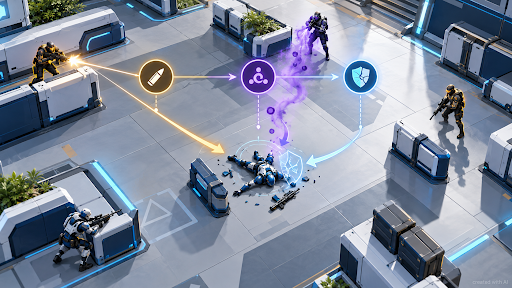
The recap should match the game’s decision scale. Useful formats include:
- a short timeline for fast action games;
- a damage breakdown for shooters and RPGs;
- a turn history for tactical games and card battlers;
- a path marker for environmental or traversal failures;
- a build summary for roguelikes with many interacting modifiers.
The format matters because raw numbers can obscure causality. Showing 12 sources of damage without indicating their order leaves the player to solve the interface before solving the encounter.
Competitive Games Must Control Information
A recap can reveal information that the surviving player has not earned. This is particularly important in team games where a defeated participant can still communicate with allies.
Riot addressed that issue in Valorant. The official Patch 9.10 notes explain that utility statistics in the Combat Report could disclose whether unseen opponents had been affected. Riot changed the timing so those statistics appear after the round resolves rather than immediately after death.
That solution preserves the report’s teaching value without turning it into an unintended scouting tool. The information remains available for reviewing the round, but it cannot influence an encounter that is still in progress.
Timing can therefore be treated as part of recap design. Personal damage and the visible attacker may appear immediately, while hidden enemy positions, unseen status applications, and team-wide statistics can wait until the round ends.
Accuracy Matters More Than Volume
A polished recap loses value when its icons, labels, or calculations are unreliable. Players quickly stop consulting a report that attributes damage to the wrong source or fails to represent shields, temporary health, and delayed effects correctly.
This maintenance continues long after a feature launches. The official League of Legends Patch 26.1 notes include a fix for a broken death-recap icon connected to one of Baron Nashor’s abilities. It is a small correction, but it shows how changes to enemies and effects must also reach the interface that explains their results.
A recap system should be tested against unusual cases such as summoned units, reflected damage, environmental hazards, damage-over-time effects, transformations, and temporary health. These interactions are precisely where players need clarification most.
The Recap Should Support the Next Attempt
Post-defeat information should answer several focused questions. What delivered the fatal damage? What made it effective? Which earlier event created the vulnerable state? Could a different action, position, or loadout have changed the result?
It should not provide a complete solution. Automatically highlighting the ideal weapon or exact safe route can remove the experimentation that gives difficult games their appeal. The recap supplies evidence; interpretation remains part of play.
Failure Becomes Useful When It Is Legible
Difficulty works best when players can connect outcomes to rules. A demanding attack can remain fast, powerful, and hard to avoid, provided its behavior is readable and the game accurately explains what happened afterward.
A good death recap does not make an encounter easier. It reduces uncertainty around the result. When the final sequence is understandable, the next attempt becomes a response to evidence rather than a repetition based on guesswork.