Tracking sports yourself can be difficult, but you can follow tournaments minute by minute with a scoring application to check the score and be notified with important events and statistics.
What is important with these statistics is not just the end result. Game development statistics can show how a game or even a tournament is being played while it is happening.
It all depends on the competition and the data provider, as well as significance. An international tournament may offer details, while a lower-profile one may have only the score and big incidents.
Following Tournaments
Large competitions usually generate enormous amounts of information.
The 2026 FIFA World Cup, for example, expanded to 48 participants and 104 matches. That makes simultaneous tracking particularly useful for fans following several games across the tournament.
A live-score service can help keep track of group-stage changes, knockouts, kick-off times and so on. This is especially useful when things overlap.
You can follow one game on television while checking another on your phone. That’s how millions of fans around the globe, including the Melbet Pick’em team, followed the events using the Melbet app.
The Score Is Only the Starting Point
It does not always really explain how things are actually going.
Let’s say a team is leading 1–0 after 70 minutes. The score looks comfortable. The statistics might tell a different story.
Even though the losing side may have had more possession, corners, and shots on target, this does not mean an equalizer is inevitable.
Match Events Appear as They Happen
Important incidents are normally displayed in chronological order. A typical timeline might show a goal, followed by a substitution and then a yellow card.
This saves time. You do not need to search through a long game report to find out what happened.
Possession and Attacking Stats
These show how much time each of them has controlled the ball. However, don’t treat mere possession as a measure of who is winning the game. A team can have less of the ball and still create better chances.
Meanwhile, shots provide another piece of the puzzle. While a shot that flies several metres over the crossbar is still recorded as a shot, it has every chance to go wrong any second. Besides, it does not have the same value as an attempt that forces a save.
Why Shot Data Can Be Useful
Not surprisingly, these numbers give an overall gist of the tempo the players picked up.
Suppose we are here:
Team Tiger: 12 shots
Team Bunny: 4 shots
Tiger: 5 shots on target
Bunny: 1 shot on target
Team Tiger appears to be creating more opportunities. Do the stats tell the whole story, though? That would be boring if they did. Just one excellent chance can sway the outcome.
Updates Are Not Always Instantaneous
There is an important detail that is easy to overlook: updates sometimes come with a delay.
The information may pass through several systems before reaching an app. A goal might therefore appear slightly after it happens on the pitch.
It can depend on the competition, provider, internet connection, and app infrastructure.
For that reason, live odds should not be treated as a perfectly real-time representation of events.
Where the Numbers Come From
Football stats are collected by specialist data providers and match observers. Different services can use various methods and definitions. This can occasionally produce small differences.
For example, one provider might classify an incident from another angle. Possession figures can also vary slightly.
This does not necessarily mean one service is wrong. It can reflect differences in methodology.
Some platforms even go beyond team-level information. They may provide individual figures for players. Depending on the competition, these can include minutes played, goals, assists, shots, etc.
Player info can make a game easier to understand. A midfielder with a high number of completed passes may be controlling possession. A forward attempting several shots may be heavily involved in attacks.
Again, context matters. Stats rarely explain a player’s entire performance.
Tables Turn and Change
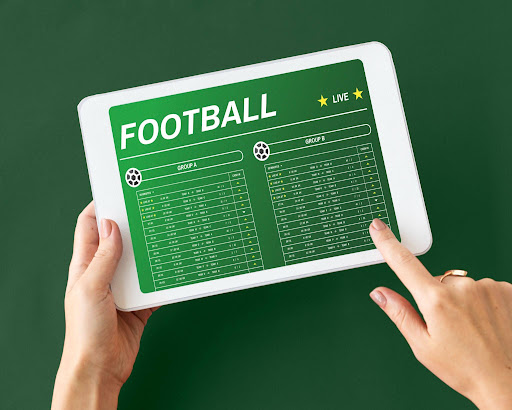
Tournament and league info is another useful feature. Some services update standings right on the go. This can help fans understand the consequences of a result.
A goal in the final minutes may move a rival several places. A draw can have a very different effect from a win.
During a tournament, this can become particularly important near the end of the group stage. The table can show what each result means without requiring complicated calculations.
A Practical Way to Follow a Match
You do not need to stare at stats throughout the entire game. A simpler approach is often better.
Check the information at important moments:
- Before kick-off
- After the first goal
- Around half-time
- In case of substitutions
- Following a red card
- During the final minutes
This gives you the main developments without turning the joy into a spreadsheet.
Use Statistics as Context
Yes, live football data can record important incidents as they happen, but it has limits. The outcome remains unpredictable. A dominant team can lose. A weaker opponent with little possession can score first.
The best use of stats is therefore simple: use the numbers to understand the game, not to assume they can predict exactly what happens next.
One thing worth remembering is that you don’t have to watch every number on the screen. You might be following a match while doing something else and only check your phone when something happens.
That is probably the best way to use live stats. They just fill in the gaps without interfering with the actual match.