Game design, at its core, is about creating systems that hold attention. Whether in a complex strategy title or a minimalist mobile game, the same principles apply: clear rules, responsive feedback, and a structure that encourages continued engagement. While slot games are often discussed in a different context than traditional video games, they offer a surprisingly rich case study in how these systems are built and refined.
Looking closely at how slot mechanics function reveals insights that extend far beyond a single genre.
Designing Around Simple Core Loops
One of the defining characteristics of slot-based systems is their simplicity. The core loop is immediately understandable: initiate an action, observe the outcome, and repeat. There are no complex controls or layered mechanics required to begin engaging with the system.
This simplicity is not a limitation, it is a design choice. By reducing the barrier to entry, these systems allow players to focus on the experience itself rather than learning how to interact with it.
Modern implementations, particularly in mobile-first environments like MrQ slots, build on this foundation by layering additional elements around the core loop. Features such as bonus rounds, cascading reels, multipliers, and themed narratives add depth without complicating the fundamental interaction. MrQ showcases how these mechanics are presented within a streamlined interface, supported by responsive design, fast load times, and clear visual feedback. For designers, this highlights an important principle: depth does not require complexity at the input level. It can emerge from how systems are structured around a simple interaction.
Feedback as the Driver of Engagement
Feedback is what makes a system feel alive. In slot design, feedback operates on multiple levels, visual, auditory, and temporal.
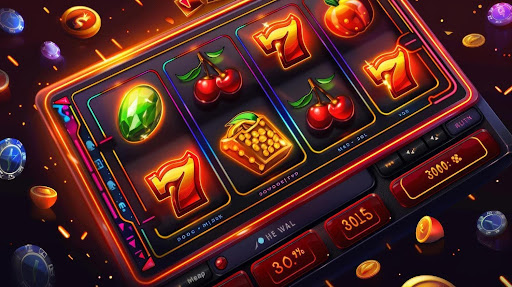
Every action produces a response. Reels spin with fluid animation, sound effects reinforce outcomes, and visual cues highlight wins or near-misses. Even small interactions are acknowledged, creating a continuous loop of input and response.
This constant feedback is essential for maintaining engagement. It reduces uncertainty about what is happening within the system and provides immediate reinforcement for each action.
In broader game design, the same principle applies. Players need to understand how their actions influence the system. Clear, consistent feedback helps build that understanding, making the experience feel intuitive rather than opaque.
The Role of Randomness and Perceived Fairness
Random number generation (RNG) is central to slot systems. Each outcome is determined independently, ensuring that results are not influenced by previous events. From a technical perspective, this creates a system that is both predictable in structure and unpredictable in outcome.
The challenge for designers is not just implementing randomness, but communicating it effectively. Players need to trust that the system is fair, even when outcomes are variable.
This is where transparency becomes important. Concepts such as return-to-player (RTP) percentages and volatility levels provide a framework for understanding how the system behaves over time. While not all players engage with these metrics directly, their presence contributes to a sense of structure.
Research and standards from National Institute of Standards and Technology emphasise the importance of reliable random number generation in digital systems. Ensuring that randomness is both technically sound and clearly communicated is key to maintaining trust.
Flow and Session Design
Flow is often described as the state in which a player becomes fully immersed in an activity. Achieving this state requires a balance between challenge and accessibility, as well as a rhythm that supports sustained engagement.
Slot systems approach flow differently from skill-based games. Instead of increasing difficulty, they focus on pacing. The speed of each interaction, the timing of feedback, and the spacing of rewards all contribute to how the experience feels over time.
Short cycles of action and response create a steady rhythm, allowing players to remain engaged without cognitive overload. This makes these systems particularly well-suited to shorter sessions, where maintaining attention quickly is essential.
For designers working in other genres, this offers a useful perspective. Flow is not only about challenge, it is also about timing, clarity, and the consistency of interaction.
Layering Systems Without Overcomplication
A common misconception in game design is that adding more features automatically increases depth. In reality, complexity can often reduce accessibility if it is not carefully managed.
Slot systems demonstrate an alternative approach. Additional features are introduced gradually and are often optional. A player can engage with the core loop without interacting with every element, while more experienced users can explore additional layers.
This layered design allows the system to cater to different levels of engagement without overwhelming new users. It also creates a sense of discovery, as players encounter new features over time.
The key is integration. Each additional element must feel connected to the core system, rather than existing as a separate component.
Designing for Short Sessions
Modern gaming habits are increasingly shaped by time constraints. Many players engage in shorter sessions, often on mobile devices, and expect immediate access to the experience.
Slot systems are inherently aligned with this behaviour. The core loop can be completed in seconds, making it easy to start and stop without losing context.
This has implications for other areas of game design. Creating experiences that can be entered and exited requires careful consideration of pacing, saving mechanisms, and session structure.
Designing for short sessions does not mean reducing depth, it means structuring the experience in a way that respects the player’s time.
Lessons Beyond the Genre
While slot games operate within a specific context, the principles behind their design are widely applicable. Simplicity, feedback, flow, and structured randomness are not limited to any one genre. What makes these systems particularly interesting is how clearly these principles are expressed. Without complex mechanics to obscure them, the underlying design becomes more visible.
For developers, this clarity offers an opportunity to study how engagement is created at a fundamental level.
As digital platforms continue to evolve, the lines between different types of games are becoming less distinct. Mechanics and design principles are shared across genres, influencing how new experiences are built.
Slot systems, with their focus on clarity and responsiveness, will likely continue to inform this process. Their ability to create engaging experiences from simple interactions highlights a core truth of game design: it is not the complexity of the system that matters, but how effectively it connects with the player.
In the end, the lessons are straightforward. Build systems that are easy to understand, provide consistent feedback, and respect the player’s time. Everything else can be layered on top.